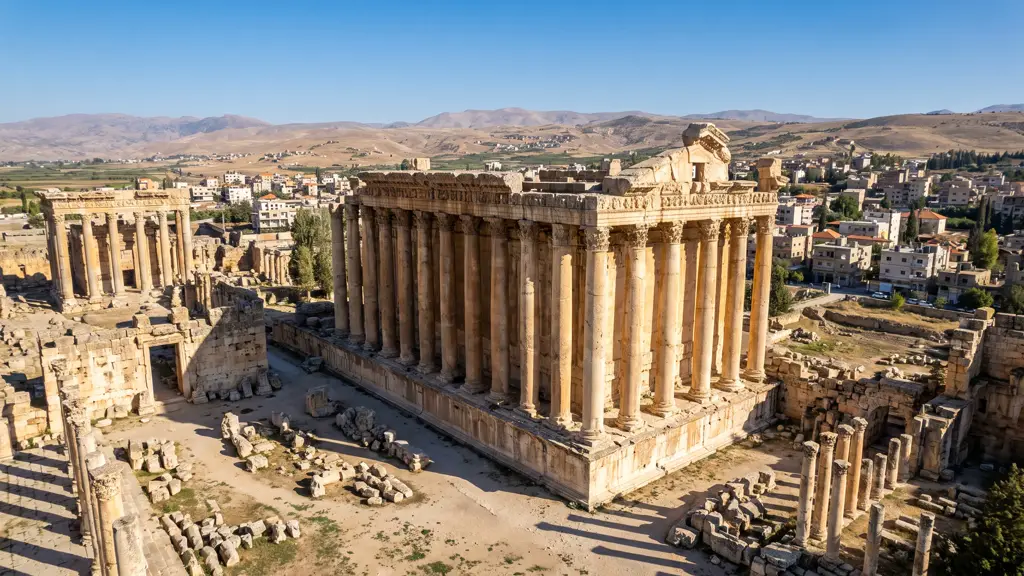
HELIOPOLIS
City of the Sun — two thousand years of Roman stone
Three Thousand Years, One Hill
A Sacred Site
Long before the Romans arrived, this was already holy ground — a hilltop shrine dedicated to Baal, the storm-and-sun deity of the Phoenician and Canaanite world. The name Baalbek carries his name still.
Heliopolis Rises
Greek settlers linked Baal to Helios, the sun god, renaming the site Heliopolis. Under Roman rule, construction began on what would become one of the largest religious complexes in the empire.
Three Temples, Two Centuries
Successive emperors funded the temples of Jupiter, Bacchus and Venus over roughly two hundred years — quarrying, carving and raising stones some weighing over 800 tonnes.
A Christian Basilica
As the empire turned Christian, the temple podium was reshaped into a basilica. Pagan sanctuary became church, one layer of history built directly on the last.
The Great Earthquake
A major earthquake struck the region, toppling columns that had stood for over a thousand years. What remains today survived by chance as much as by craftsmanship.
A World Heritage Site
UNESCO inscribed Baalbek as a World Heritage Site, recognising it as one of the finest examples of Imperial Roman architecture anywhere on earth.
Three Temples
Temple of Jupiter
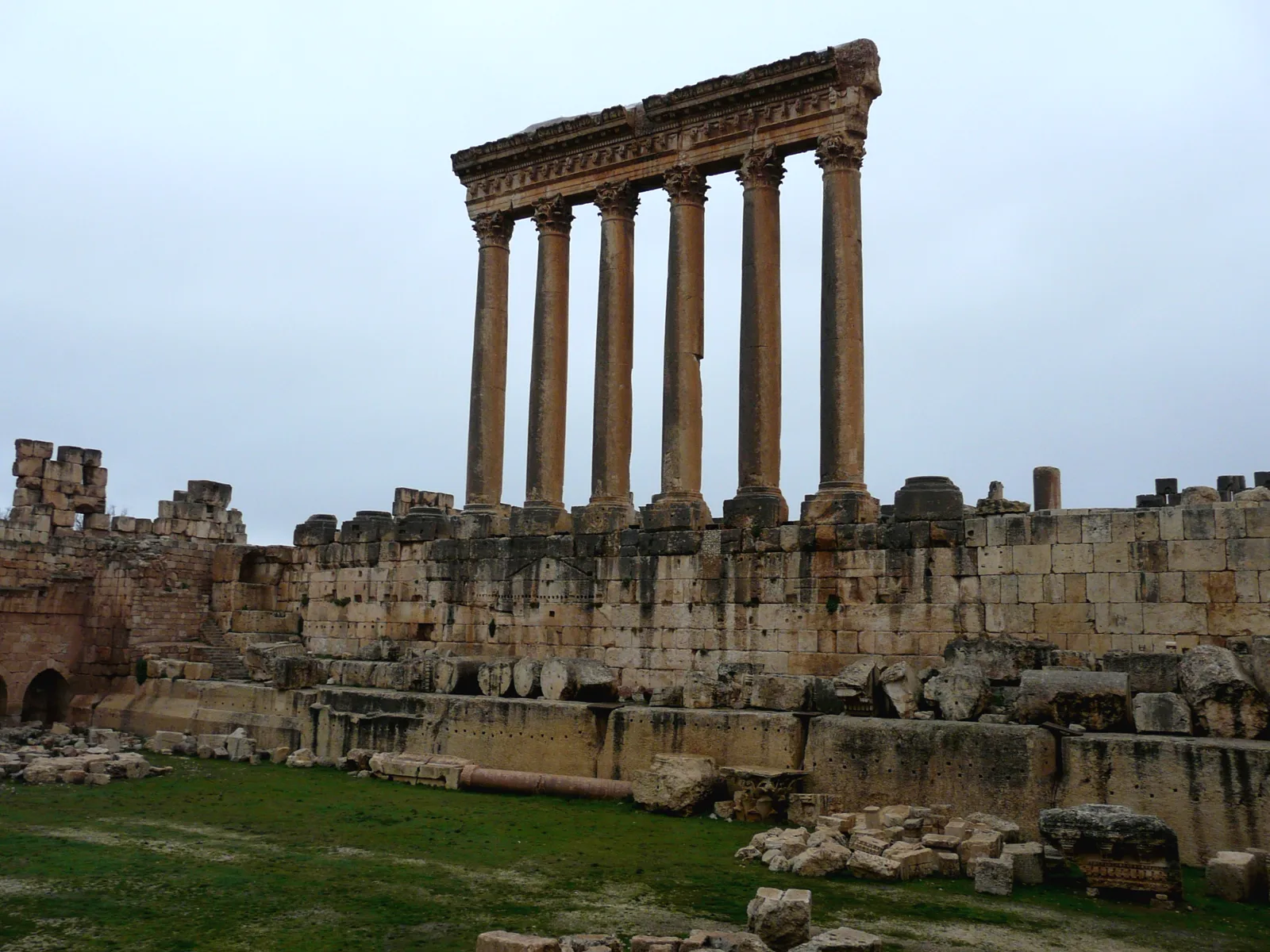
The largest temple ever built in the Roman world. Only six of its towering columns still stand, but their scale alone explains why Baalbek awed every traveller who saw it.
Six Columns RemainTemple of Bacchus
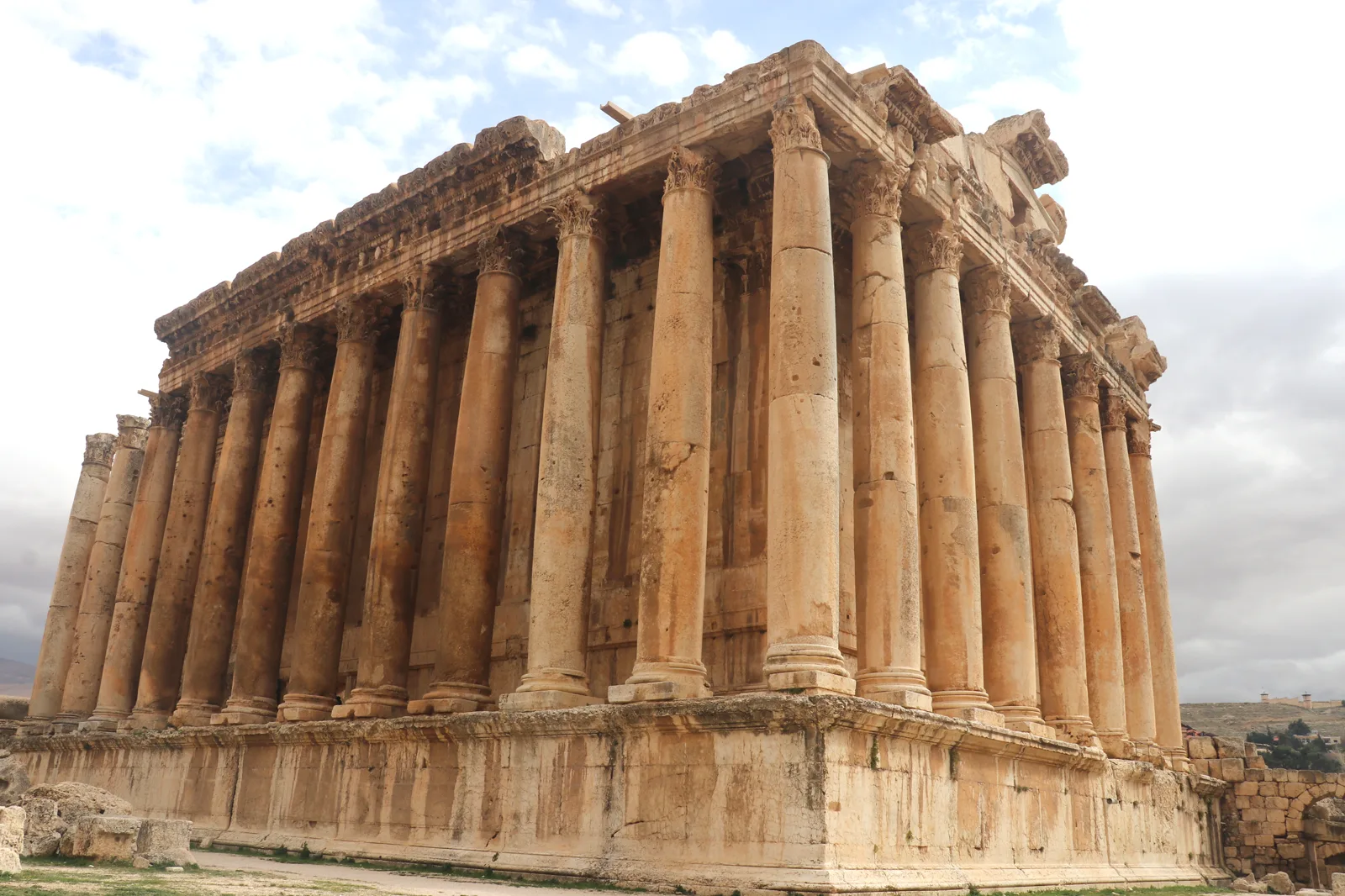
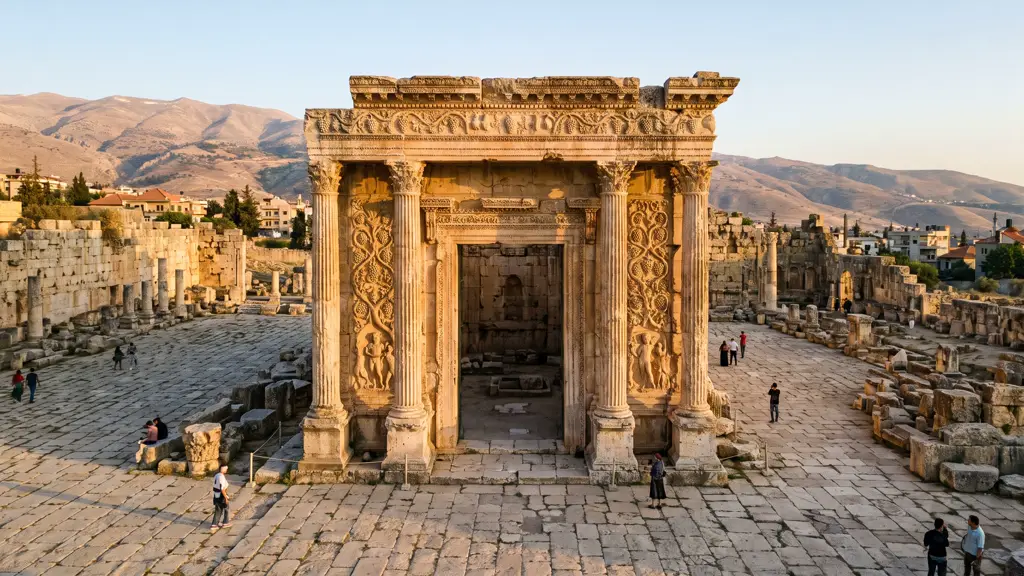
Smaller than Jupiter’s temple in name only. Widely considered one of the best-preserved Roman temples anywhere, its colonnade and carved doorway survive almost intact.
Largely IntactTemple of Venus
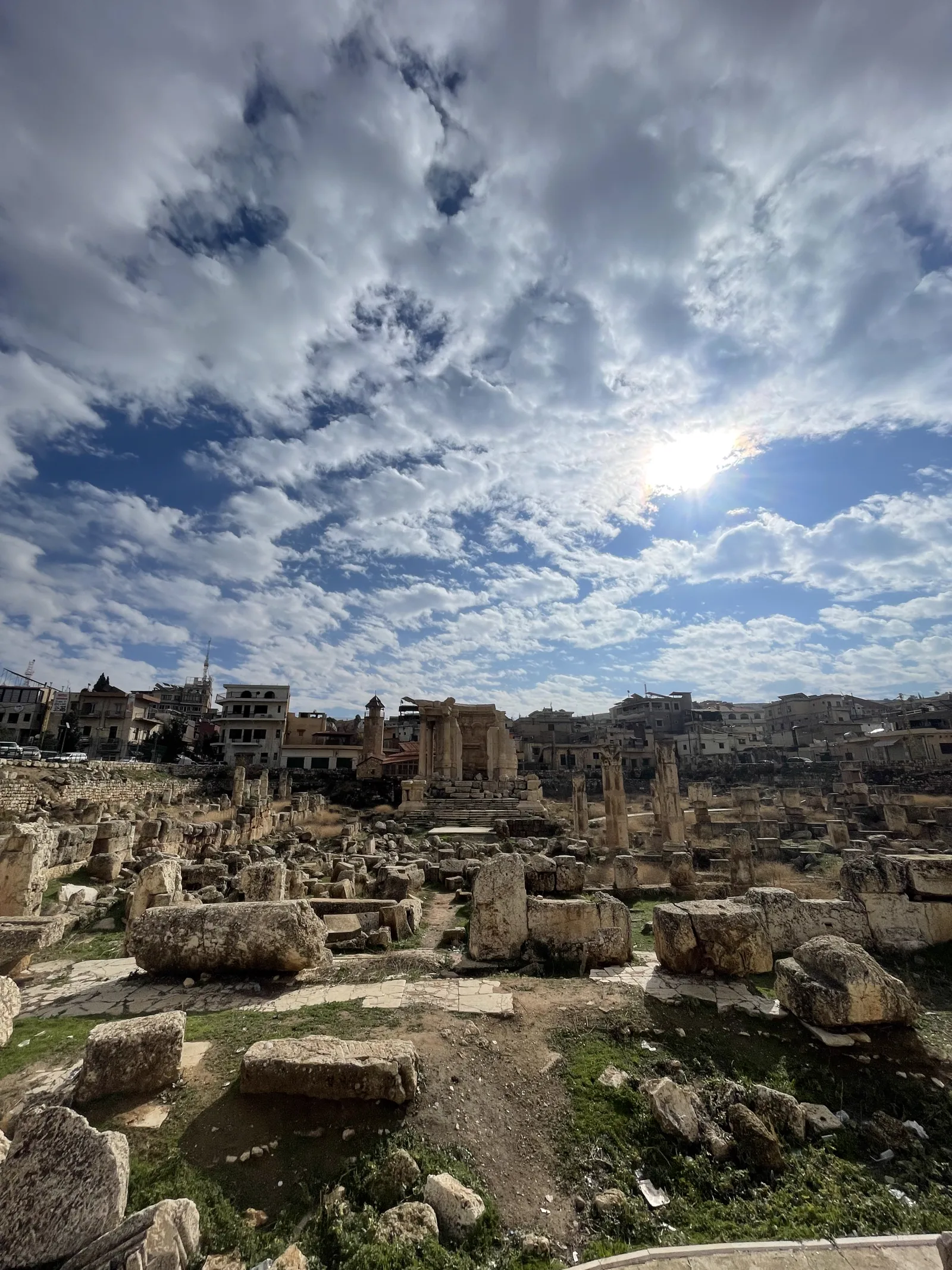
A more delicate, circular design set apart from the main complex — dedicated to the goddess of love, and unlike anything else the Romans built in the region.
Partially RuinedStone That Remembers
Every column and carved lintel here has outlasted the empire that raised it. A closer look at the details that make Baalbek unlike anywhere else on earth.
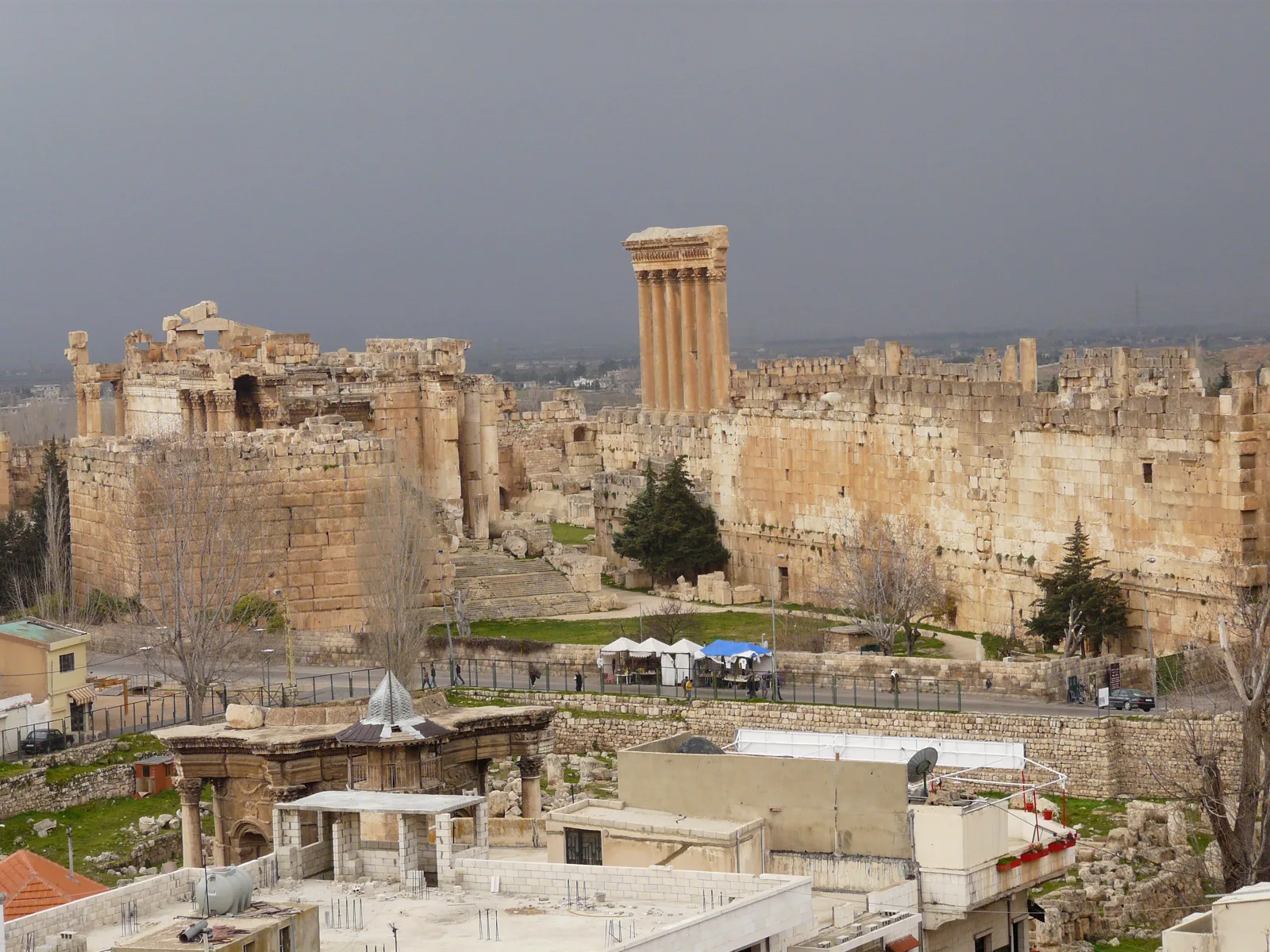
The six columns of Jupiter
Standing nearly 20 metres tall, these are among the largest Roman columns ever raised — and the tallest still standing anywhere.
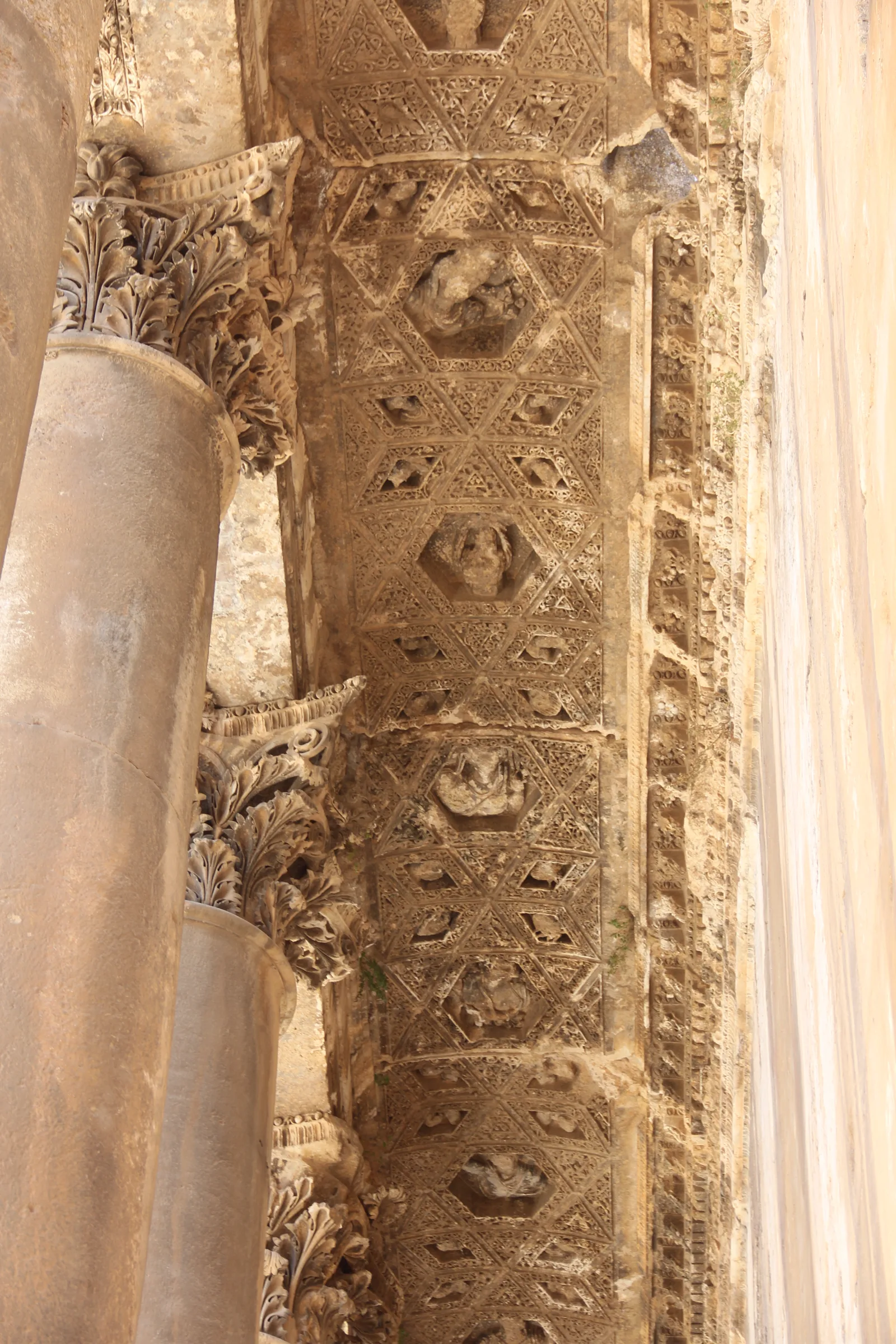
Carved ceiling, Temple of Bacchus
Zeus, Ganymede and vine motifs cut directly into stone, still sharp after two thousand years under open sky.
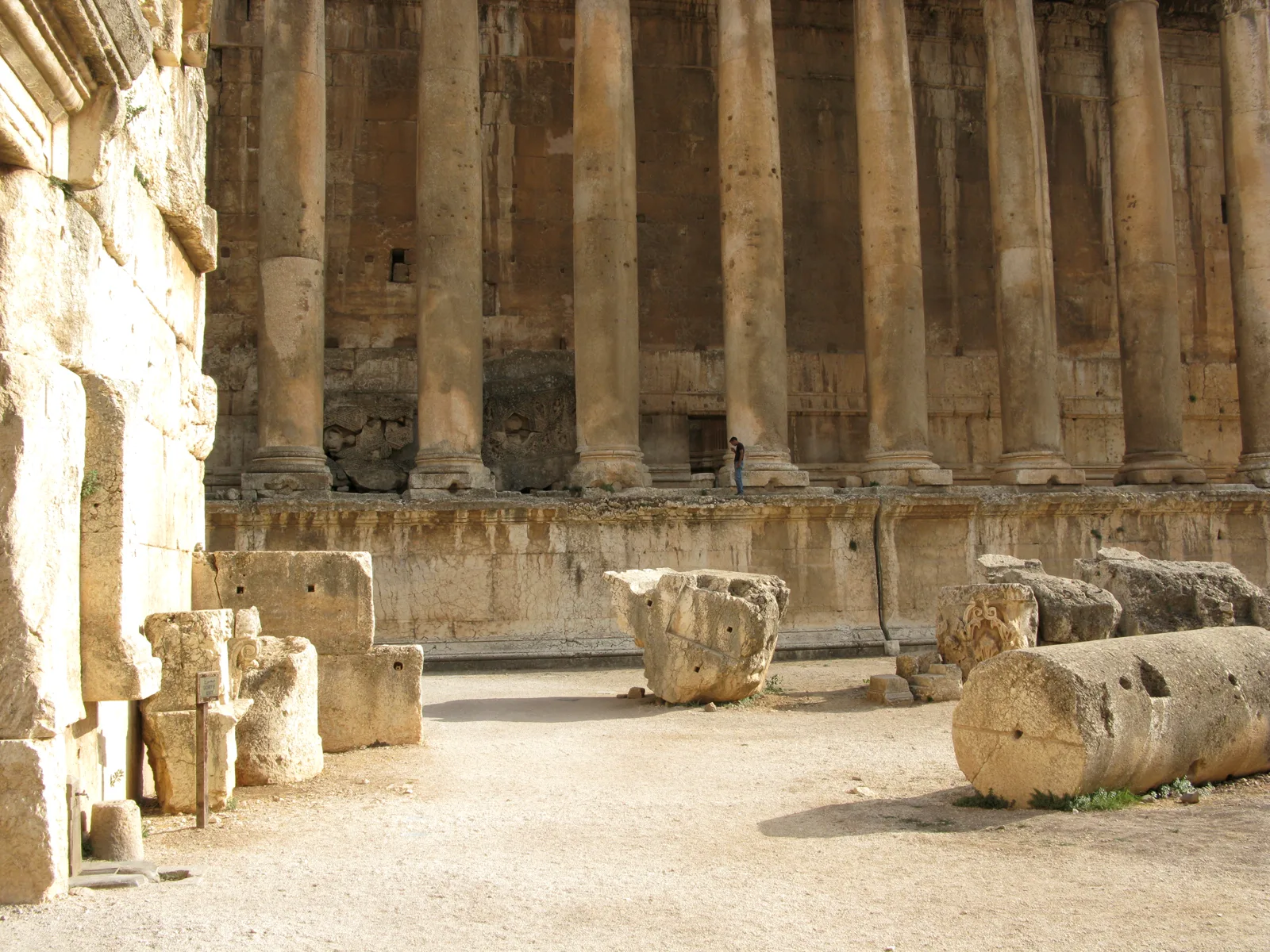
The Hexagonal Court
A grand forecourt that once funnelled pilgrims toward the Great Altar — its geometry still visible in the fallen stone.
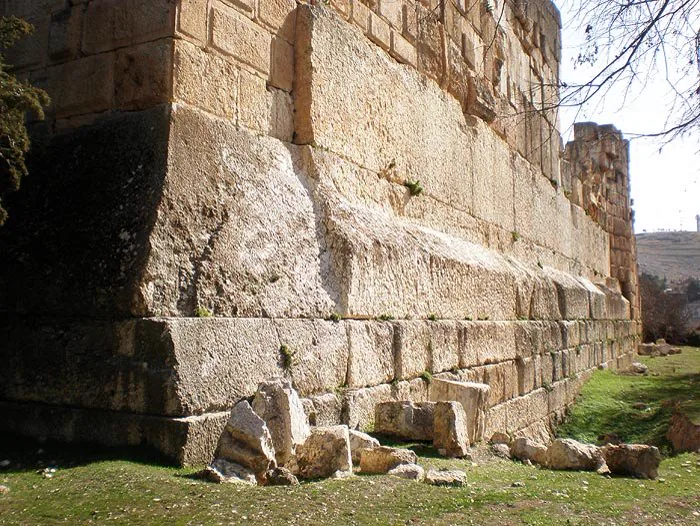
The Trilithon
Three foundation stones, each over 800 tonnes, quarried and set with no machinery but human ingenuity.
Temple of Venus, detail
Delicate scalloped niches on a temple built like nothing else the Romans left behind in the region.
The six columns of Jupiter
Standing nearly 20 metres tall, these are among the largest Roman columns ever raised — and the tallest still standing anywhere.
Carved ceiling, Temple of Bacchus
Zeus, Ganymede and vine motifs cut directly into stone, still sharp after two thousand years under open sky.
Cafés & Cuisine of Baalbek
Baalbek is temples by day and long tables by night — arguileh smoke curling over backgammon boards, and coffee poured the way it has been for generations.
"قهوة عالأصول" — coffee, the traditional way
Coffee, the Bekaa Way
Thick, unsweetened, and poured into small cups — Baalbeki hospitality usually starts here.
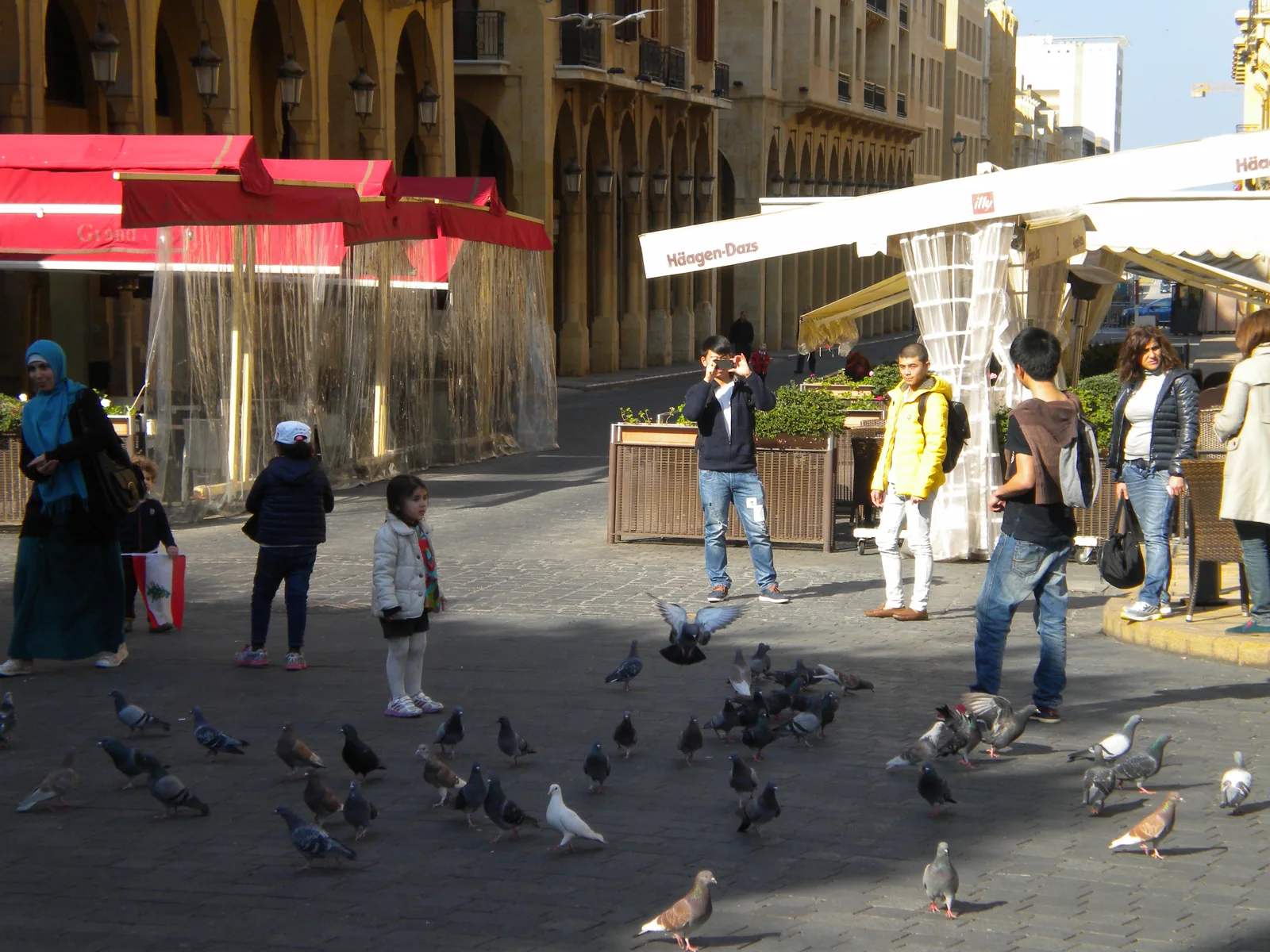
The Arguileh Evenings
Long after the ruins close for the day, the town's cafés fill with shisha smoke, dice, and unhurried conversation.

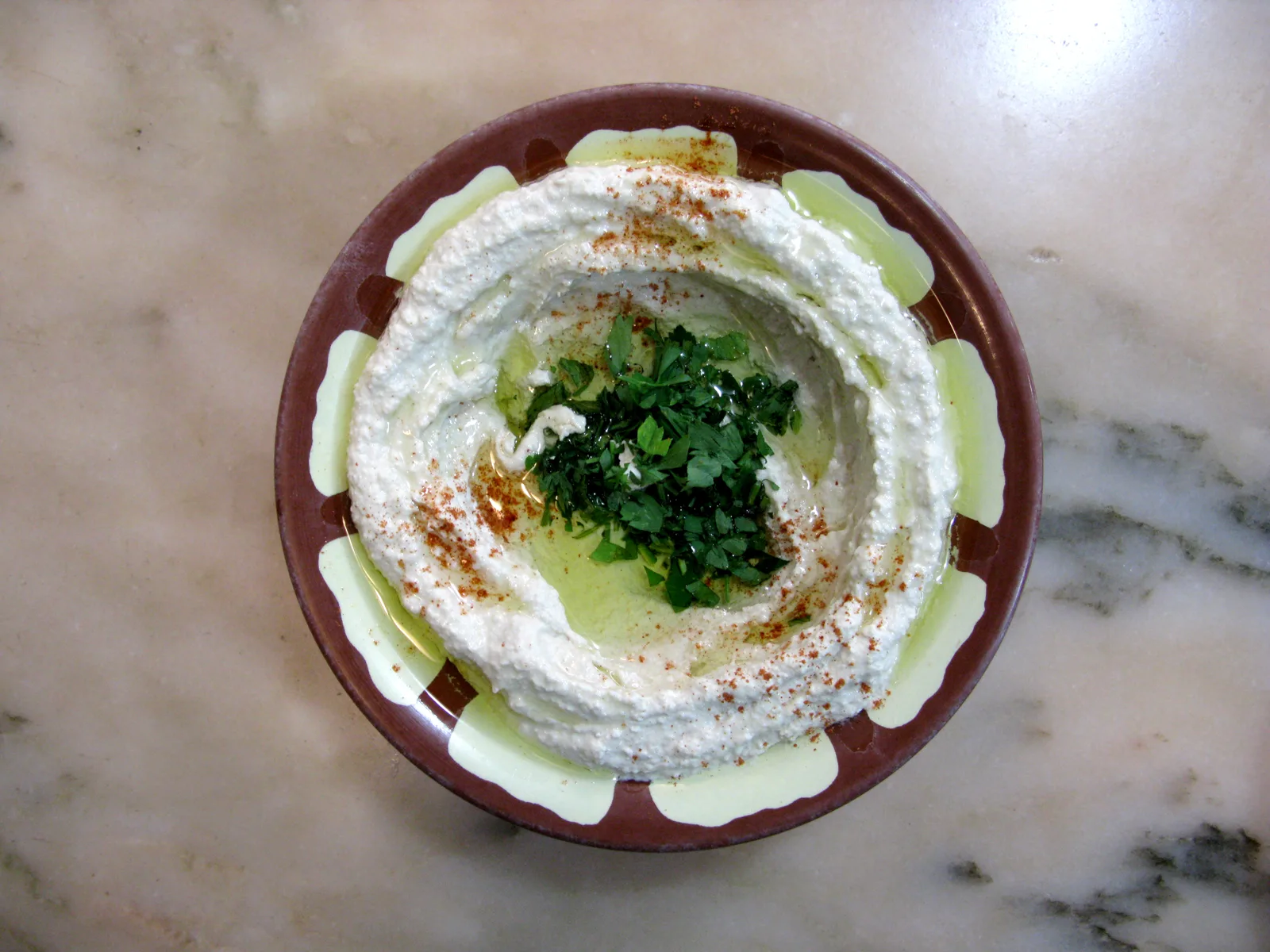
The Mezze Table
Manakish fresh off the saj, hummus, and whatever the season's harvest brought in from the Bekaa Valley fields.
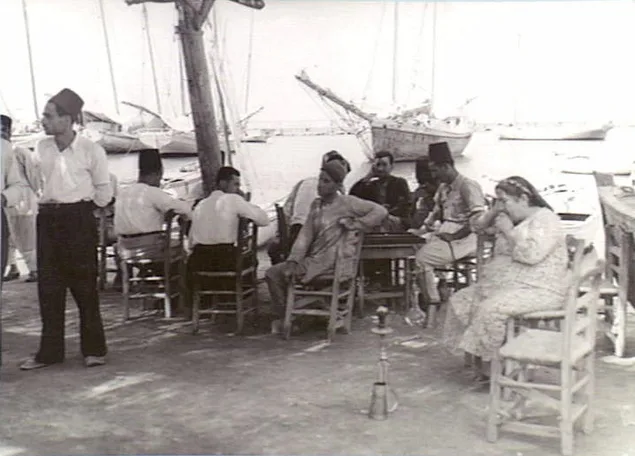
Backgammon & Black Tea
The unofficial national sport of every Baalbeki café — played loud, played often.
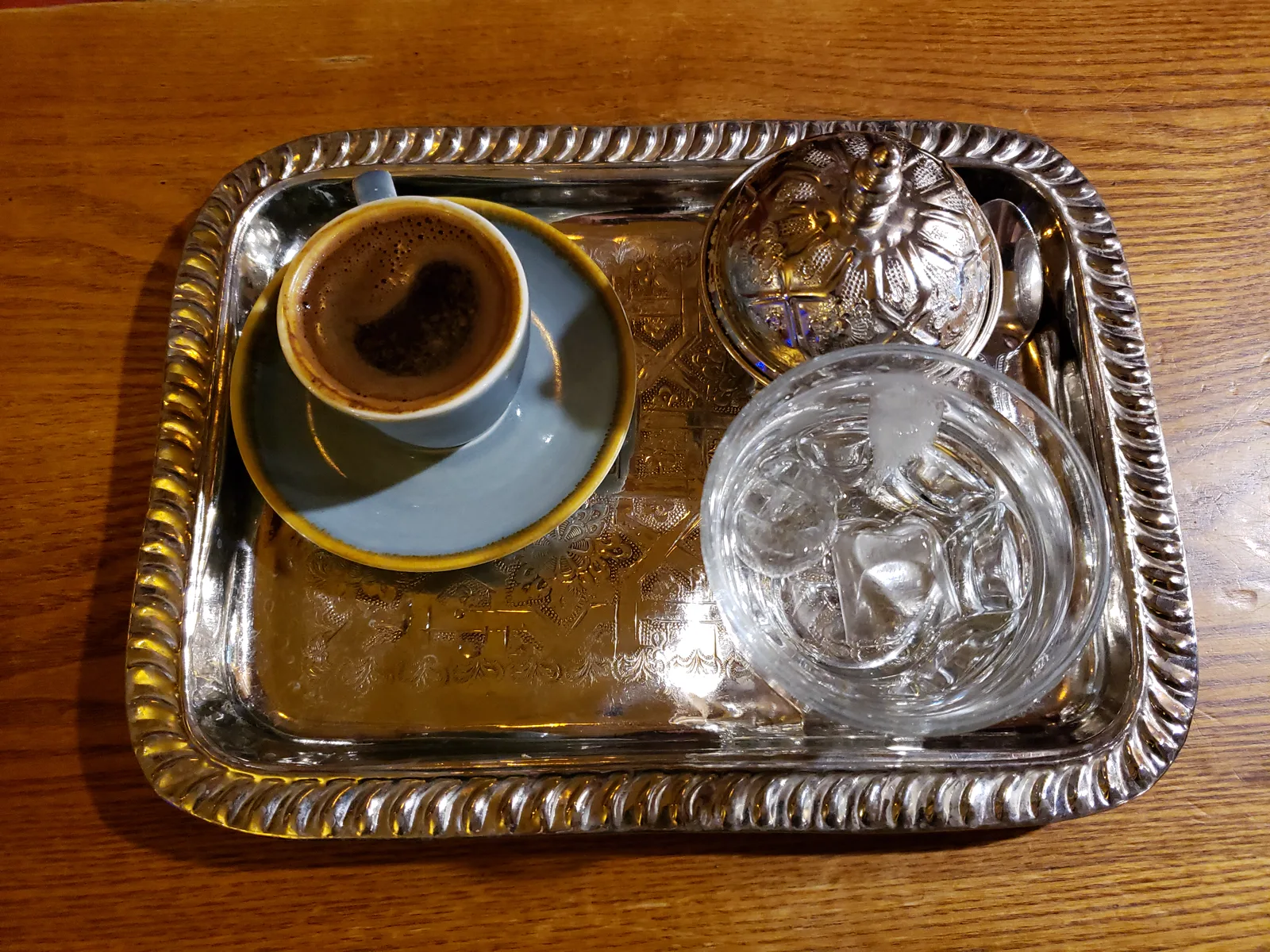
Coffee, the Bekaa Way
Thick, unsweetened, and poured into small cups — Baalbeki hospitality usually starts here.
Visiting Heliopolis
The site is best seen early morning or in the last light before sunset, when the stone turns the same gold you see in the columns above. Comfortable footwear is essential — much of the site is uneven ancient paving.
Baalbek, Beqaa Valley, Lebanon — exact opening hours vary seasonally; confirm before travelling.
Plan Your Visit
Leave your details and we'll help you plan the right time to go, with a guide if you'd like one.